AITA for refusing to buy a coworker lunch
In a world where generosity is often mistaken for weakness, one man’s relentless entitlement casts a shadow over the simple act of sharing a meal.
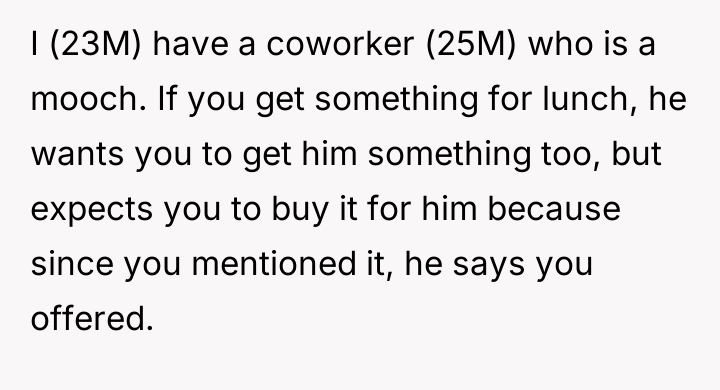
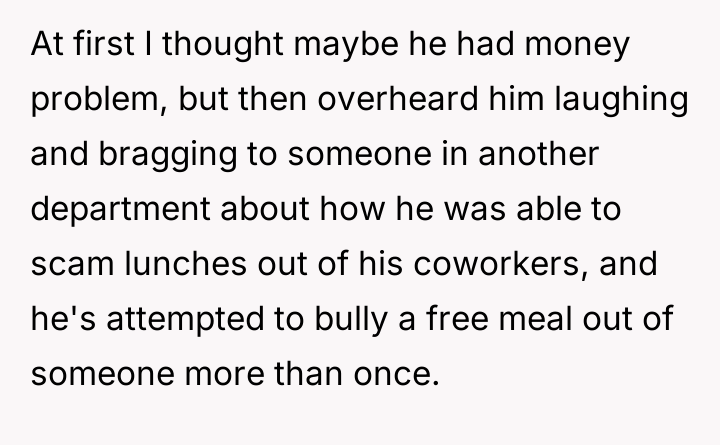
The 23-year-old coworker, blindsided by the brazen audacity of a colleague who believes lunch should always come at someone else’s expense, wrestles with frustration and disbelief as he uncovers the truth behind the mooch’s smiling facade.
What began as a quiet hope for kindness turned into a confrontation with greed and manipulation, shaking the foundation of workplace camaraderie.
As boundaries are tested and patience worn thin, the story unfolds with raw emotion, revealing the painful cost of entitlement and the strength it takes to stand firm against it.

Subscribe to Our Newsletter
No spam, unsubscribe anytime. Privacy Policy
Commenters Came in Hot with Their Takes:
What started as a simple post quickly turned into a wildfire of opinions, with users chiming in from all sides.
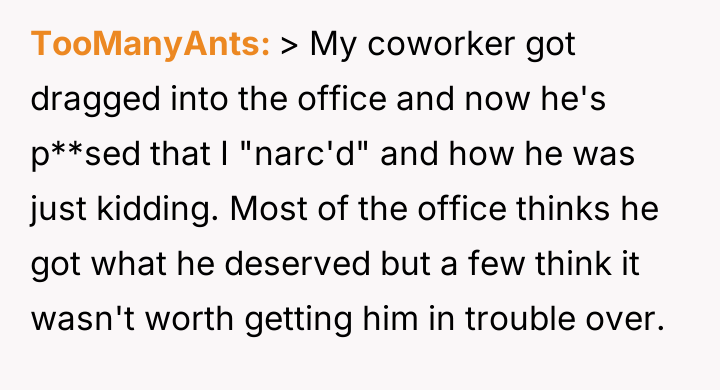
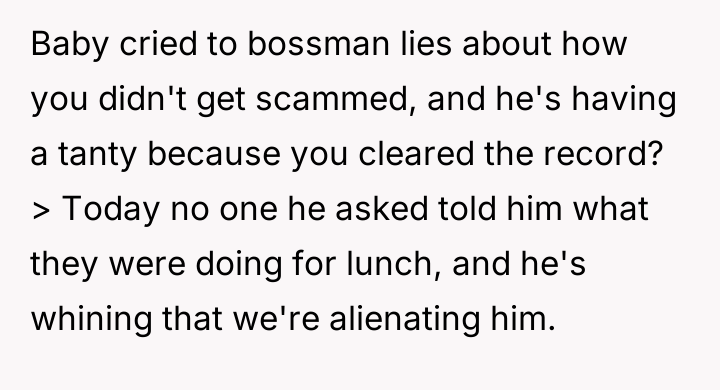
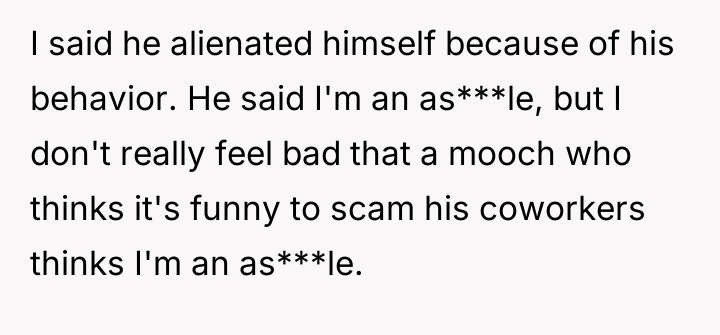
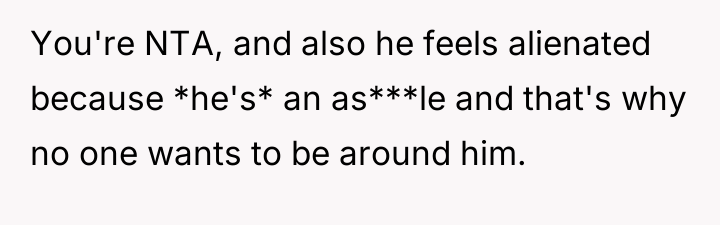
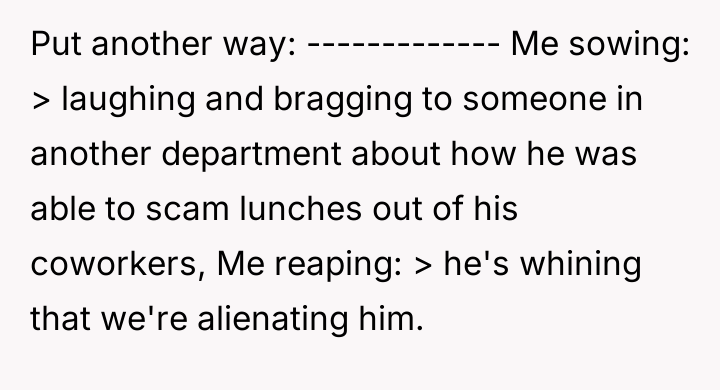
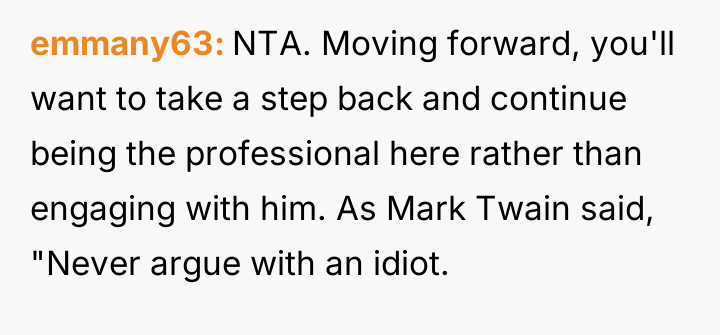
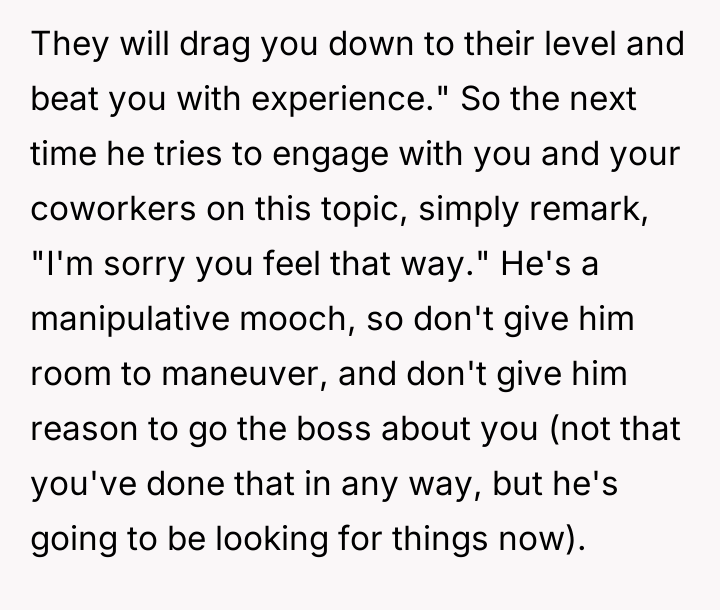
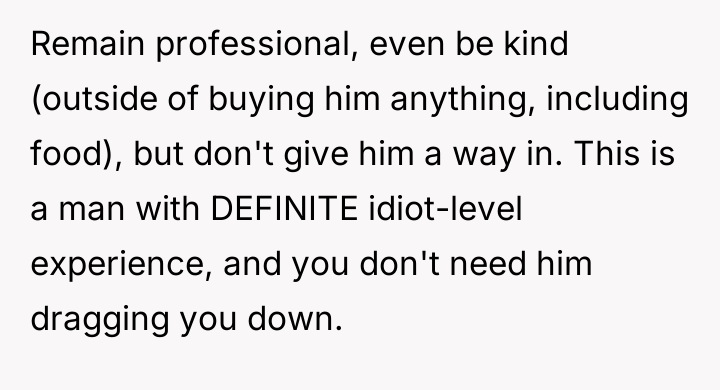
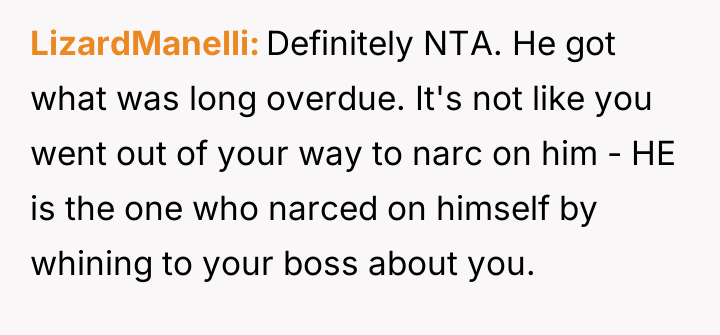
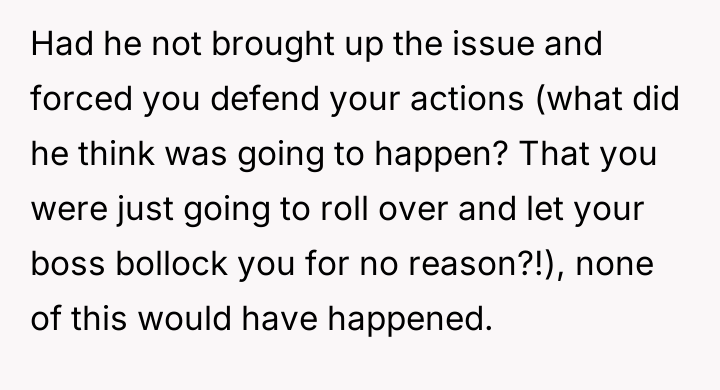
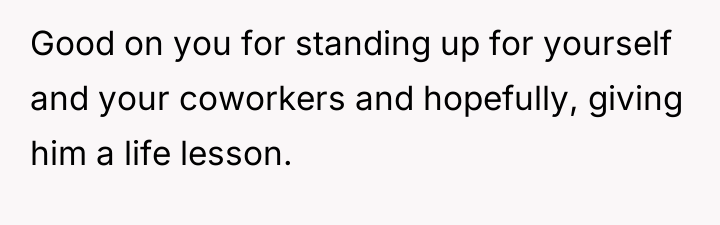
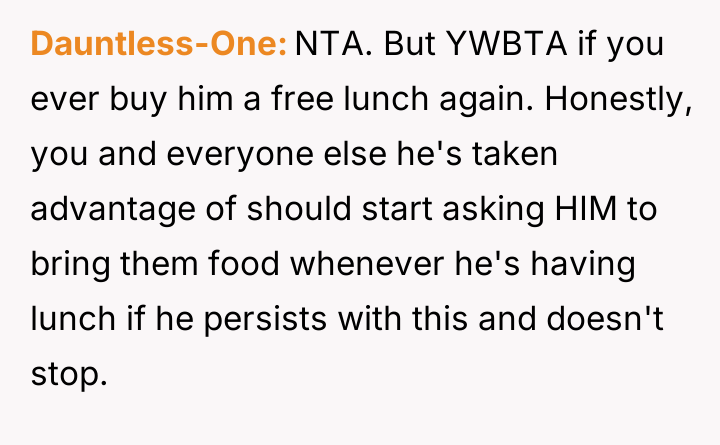
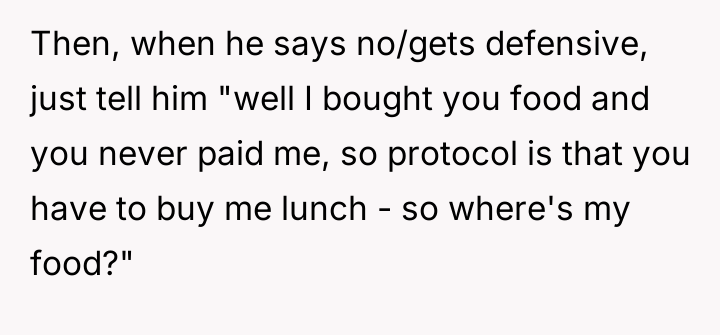
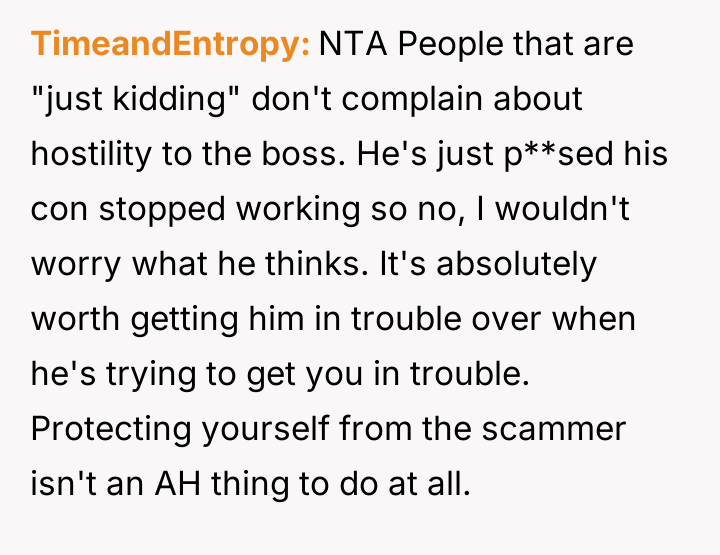
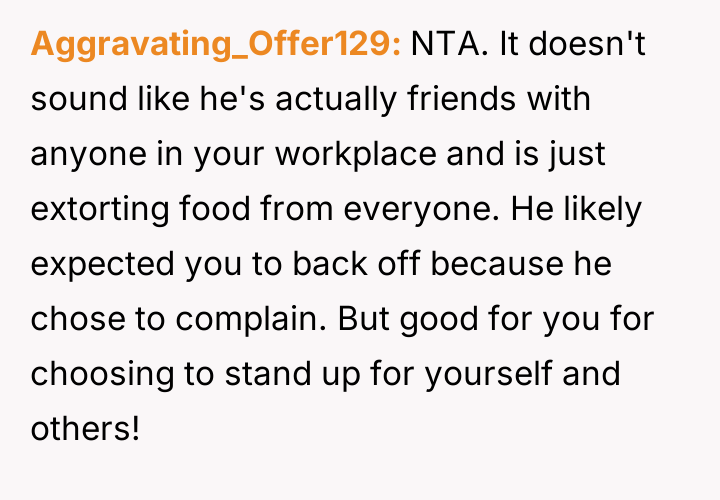
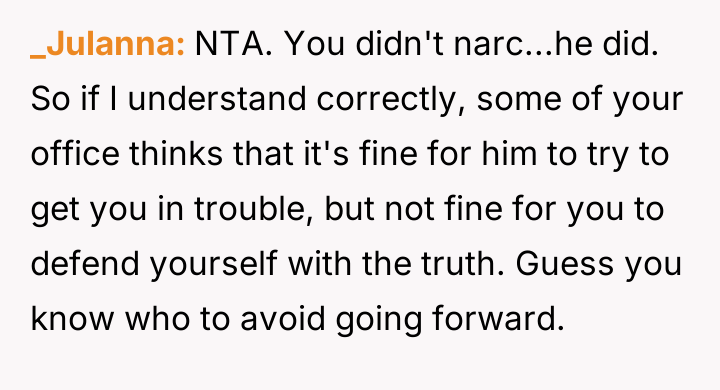
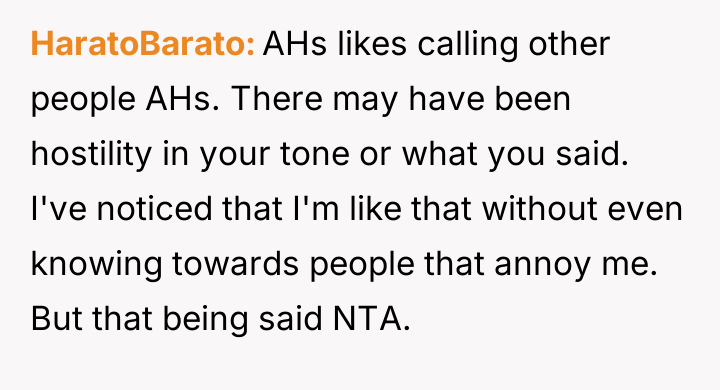
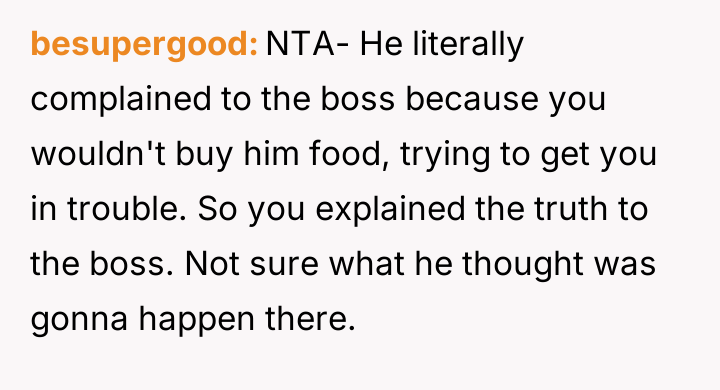
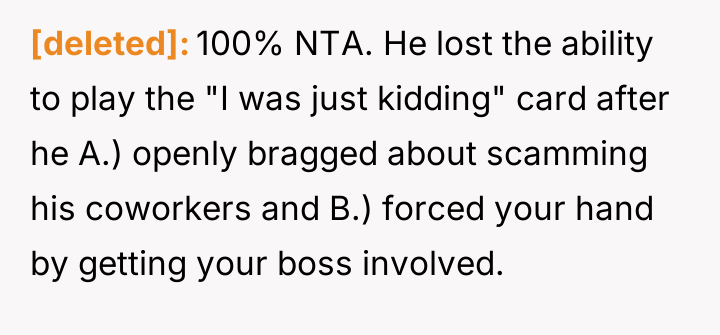
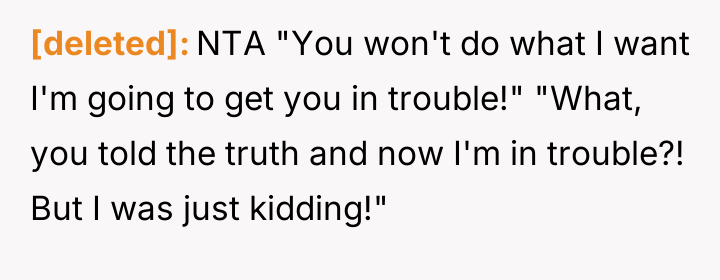
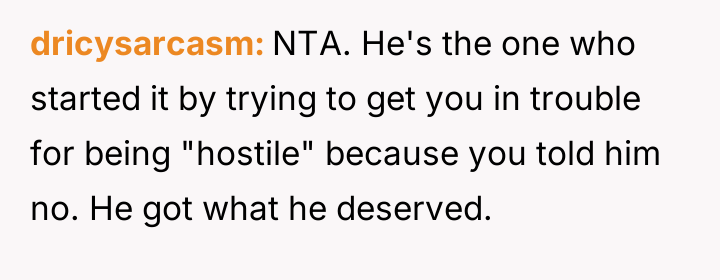
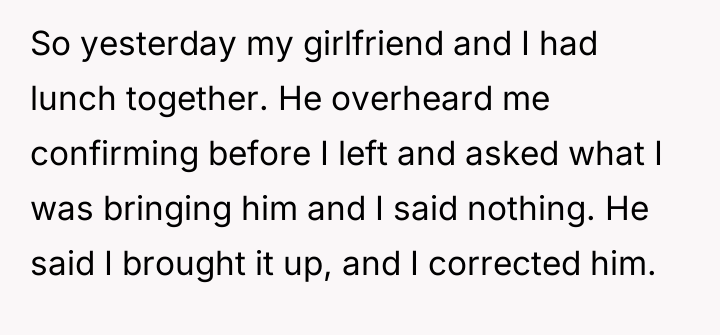
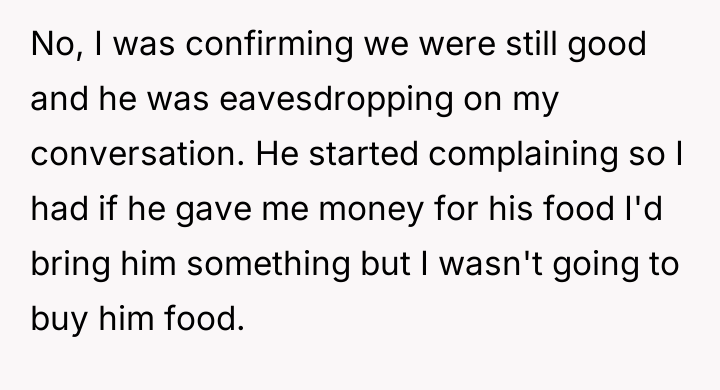
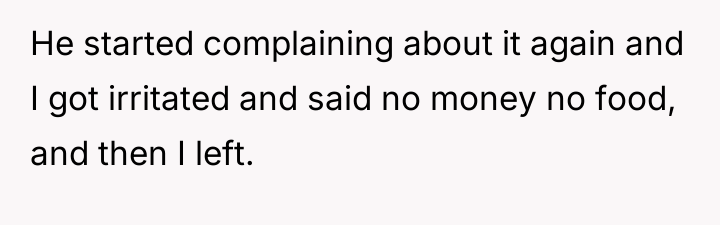
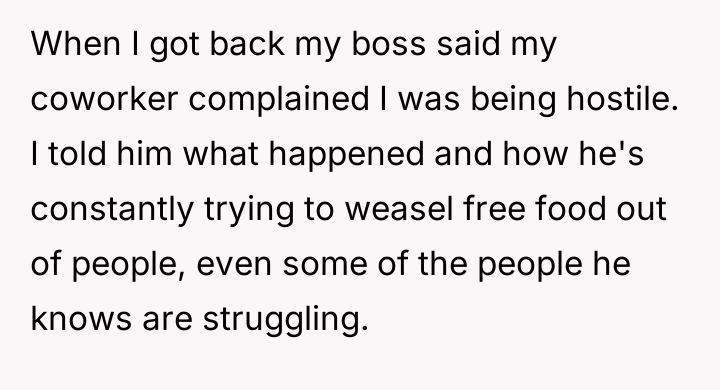
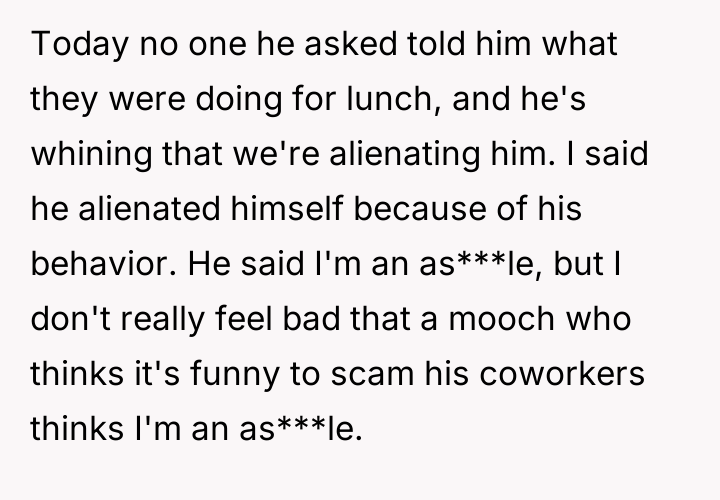
The original poster (OP) clearly felt burdened and disrespected by the coworker's persistent behavior of expecting free items, which culminated in a confrontation over lunch arrangements.
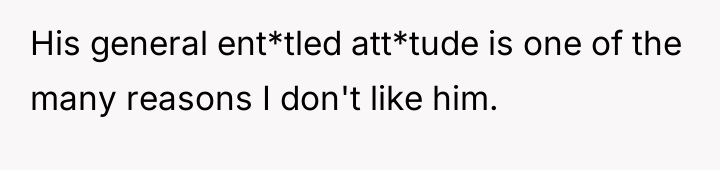
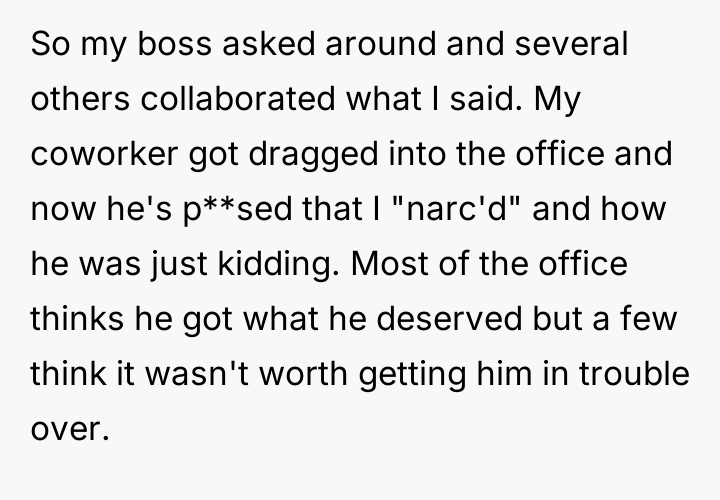
The central conflict lies between the OP's desire to establish firm boundaries against being taken advantage of and the coworker's expectation that his entitled demands should be met without consequence, leading to the coworker feeling victimized after his actions were reported to management.
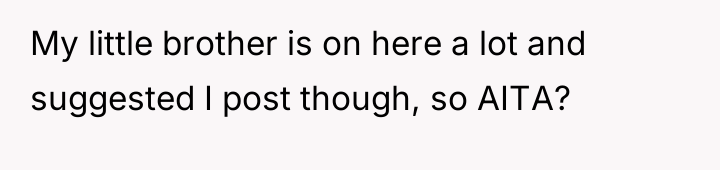
Was the OP justified in reporting the coworker's pattern of behavior to management, or would it have been better to maintain workplace harmony by refusing to purchase food without immediate payment?
The debate centers on whether confronting exploitative behavior directly via authority is appropriate in a professional setting, or if such matters should be handled solely through peer-to-peer boundary setting.